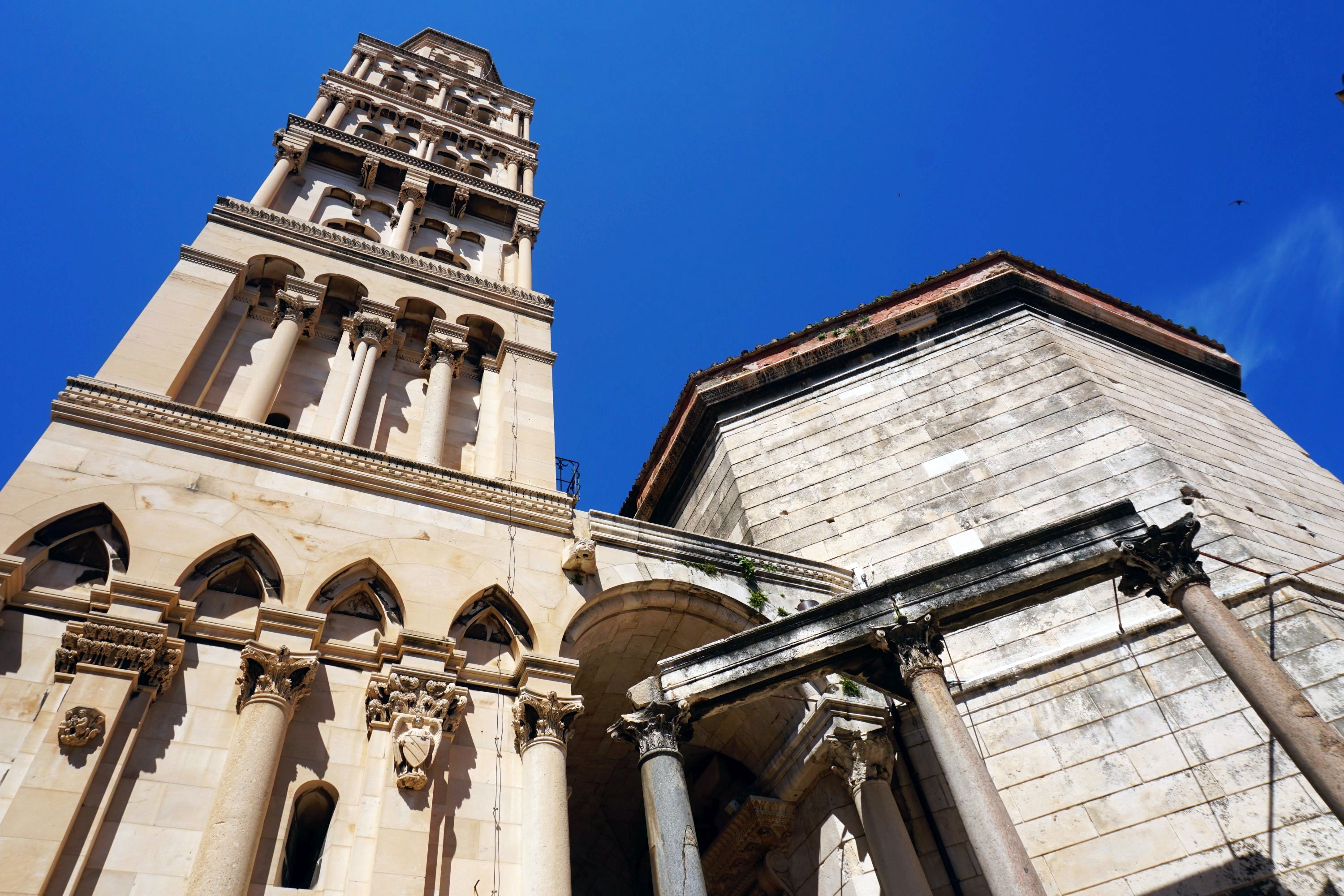
The second largest city in Croatia, Split offers a wonderful mix of the old and the new, and is a good base for exploring the region. The heart of the tourist part of the city is the old town, which has grown from Diocletian’s Palace, built for the Roman emperor of the same name, in the 4th century. He was well known for his persecution of Christians, who got their revenge in the fifth century when they converted his mausoleum into Saint Domnius Cathedral.


The Old Town is extensive and a delight to get lost in, never being too far away from an ice cream shop.

Strolling along The Riva on a sunny day is one of the more pleasurable things to do in Split.


Salona was once the fourth largest Roman city in the empire, home to 60,000 people. Only about 15% of the ancient city, now 20 minutes drive from the old town, has been excavated, but there are some significant structures to see. The first is the Manastirine, dating from fifth century, where Christian martyrs were buried.


Walking along the tops of the city walls gives an idea of the scale of the city.


The largest remaining structure is the second century amphitheatre.


Another Roman structure, though significantly added to over the years, is Klis Fortress. Another ten minutes drive further on from Salona, it offers quite breathtaking, if hard to capture, views over Split below.


There isn’t much to see inside the structures, other than a small chapel, but there are plenty of panoramic views of the surrounding landscape.


I don’t normally mention restaurants but the nearby Perlica is a well known place to eat near Klis, famous for its slow cooked lamb visible outside.

Back in town the Split Archaeological Museum was moderately diverting. The inside was closed for renovation so only the outside collection could be seen, though there were some interesting pieces, most of which had come from Salona.


My first day in Split was torrentially wet, unusual for June. I sought escape from the rain in the Split Ethnographic Museum, mainly home to traditional clothing.


I was the only visitor to the Croatian Maritime Museum, which offered the usual selection of items familiar from so many other maritime museums I’ve visited.


The highlight was half a ship somewhat surreally sitting around the back of the museum, next to a chapel.


There were also good views from the walls, as the museum is housed in the 17th Gripe Fortress, built in a prominent position above Split.

To the west of the old town are a number of churches, including Church of the Holy Cross, St. Nicholas Church, and the Church and Convent of St. Francis, though only the later was open when I visited.


To finish with the best known but not the best beach in Split. Bacvice Beach owes its popularity more to its location than quality. Apparently in summer it is packed, mostly with locals, but it was near deserted when I walked by early one more morning on my way to catch a ferry.


Leave a Reply