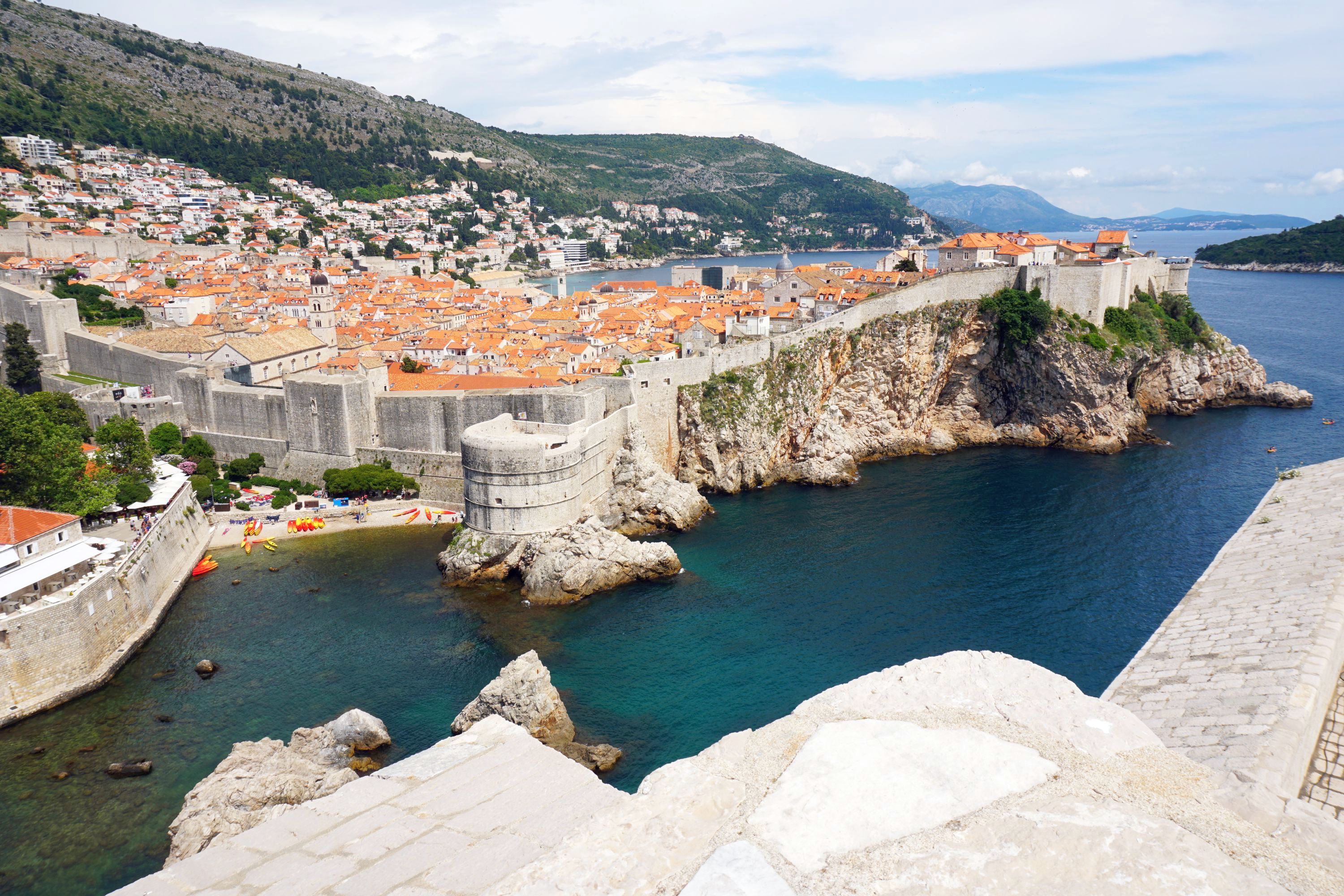
I had mixed feelings about visiting Dubrovnik, but was pleasantly surprised in the end. Pre-Covid it had become a prime example of over tourism, with vast numbers of cruise ship passengers and other visitors swamping the Old Town. Though very busy on a Saturday in early June 2023 it was reasonably straightforward to avoid the masses, by venturing down the backstreets or visiting the quiet museums. The Stradun (Main Street) was always busy though, particularly when multiple tour groups met.

The near 2km long City Walls are understandably the star attraction, offering stunning views of the city and surrounding landscape. A ticket to visit them was E35, the same price as the Dubrovnik Pass which included the City Walls and many museums, making it a great deal. The tour groups were a bit of a pain, but there were quieter parts between them where it was easier to enjoy the atmosphere and views.


The Old Town is incredibly complete, understandably a UNESCO World Heritage Site, though there were some more modern sights, including these two sports fields tucked inside.


Some of the best views of the city are from the Minčeta Fortress, at the end of the City Walls (if you start at the Pile Gate) as there is a one way system.


In the Old Town itself there are plenty of churches as expected, with the 17th century Cathedral of the Assumption of the Virgin Mary home to some attractive naves.


St. Blaise’s Church was a welcome oasis of quiet at the end of the Stradun.


The Franciscan Church and Monastery was the most atmospheric for its lovely courtyard, with unusual double arched columns.


The most impressive though was the Church of St. Ignatius, the largest church in the Old Town.

The 16th century Sponza Palace was originally the city’s custom house and mint.


The Rector’s Palace has a similar look and feel, as the former home of the Dubrovnik government. It is now home to the Cultural and Historical Museum, which lacked narrative to explain either aspect of the city, but did have a somewhat eclectic collection on display.


The Maritime Museum had far more narrative, though it was very much a traditional museum, with the usual model ships, though all nicely displayed.


The Archeological Museum collection was also well displayed, though there wasn’t much to see.


The Ethnografic Museum was housed in the most impressive building, a 16th century grain store, now filled with the usual collection of items from past lives.


Outside the City Walls Fort Lawrence or Lovrijenac offered some of the best views of the city, from impressive 16th century fortifications built to protect the western approach to the city.


Almost all of Dubrovnik’s main sights are in the Old Town, but there were a few things of interest elsewhere in the city, including Uvala Lapad or Sunset Beach.


The walk from the main marina to the Old Town was also rather scenic.


Leave a Reply