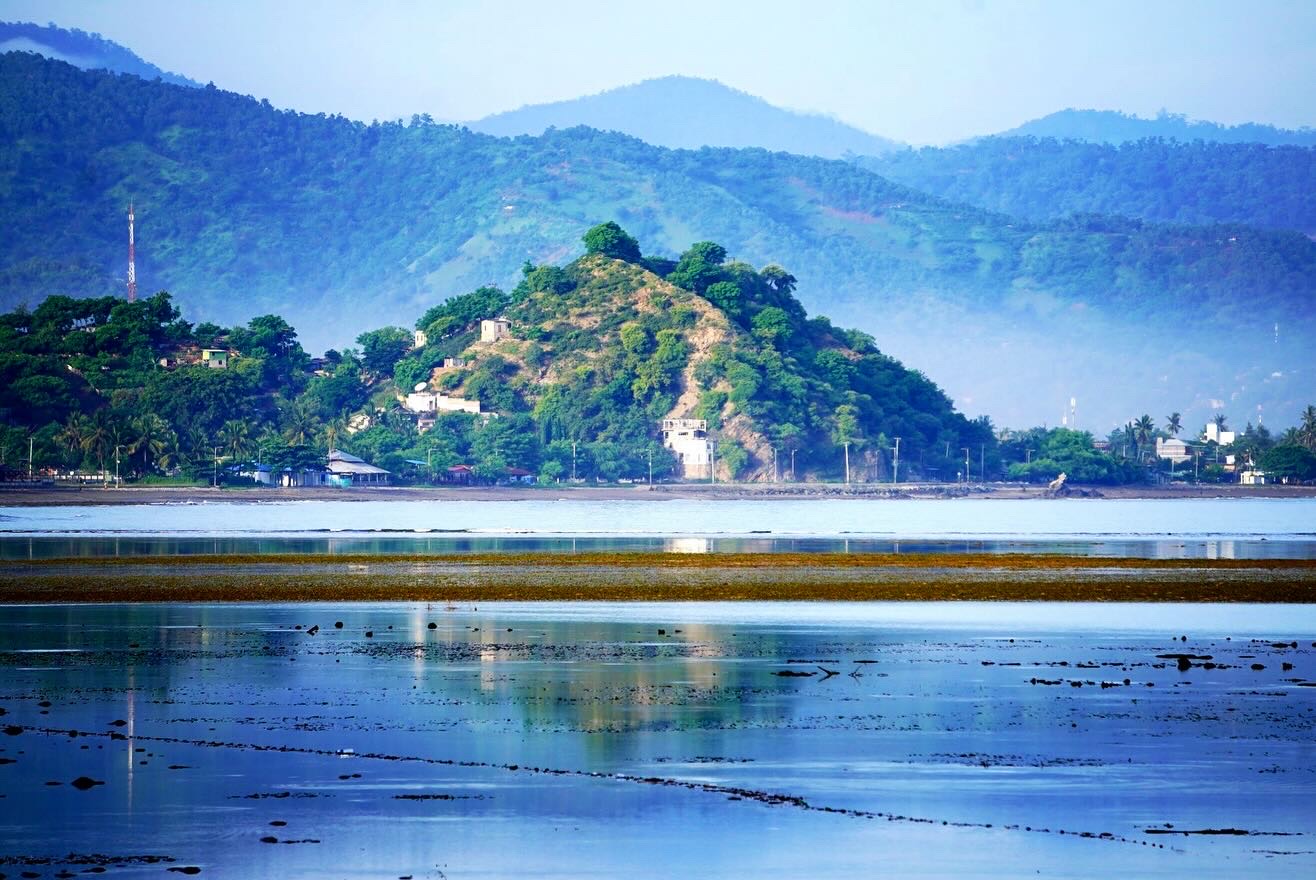
In February 2024 I moved from New Zealand to Dili, the capital of Timor-Leste. I was there with my partner volunteering at local NGOs through Volunteer Service Abroad, a New Zealand organisation that does amazing work in the Pacific and Timor-Leste. Moving from the 32nd richest country in the world, to the 35th poorest, with a completely different climate and culture was quite an experience.


This post was written after ten days in the country and captures my first impressions and what I learnt about this little known country. Timor-Leste has only been a sovereign country since 2002 after centuries of colonial rule by the Portuguese and decades of brutal occupation by Indonesia. It lies at the eastern end of the Indonesian archipelago, about a hour’s flight north of Darwin at the top of Australia.
The first thing that hit me when I got off the plane was the heat and humidity. It is usually above 30C during the day time, and around 23-25C at night, at near constant ~80% humidity. This is quite different from Wellington, where I live in New Zealand, which rarely gets above 20C and has a dry climate. I have started to adjust to the climate, helped by using fans during the day, air conditioning at night, and tending to only be out in the mornings, but it is still disconcerting to break out into sweat while doing nothing. While hiking I’m basically totally soaked with sweat, and need to be careful to drink enough water and take hydrolytes.


I arrived in the wet season, which runs from around November to April. It wasn’t as wet as I’d expected. In ten days it rained three times, torrentially, but only for a few hours late afternoon and the rest of the time it has mainly been sunny and dry. Mosquitoes are a real risk during wet season, particularly as Dengue, Zika, and Chikungunya (but not Malaria in Dili) are prevalent, so precautions definitely need to be taken, but they are nowhere near as common as sandflies are hiking in New Zealand.

The Timorese are absolutely lovely people. They’re friendly and welcoming but also leave you alone most of the time (though I have been asked for a couple of selfies). They’ve had a rough history, but members of the international community have helped. For example in the early 2000s some six thousand New Zealand Defence Force and Police personal supported the country through challenging times. I’ve felt completely safe walking around Dili, even up into the hills behind alone in the mornings around 7am, saying “bondia” (good morning) to locals on their way to work or school.

I’ve visited over 75 countries and I’ve never seen fewer tourists than in Timor-Leste. Even Transnistria (contested region of Moldova, the least visited country in Europe) and Syria had more tour groups than I’ve seen in Dili (though most people visit in the dry season). I’m unsure whether I’ve seen any tourists here to be honest. Given how few malaes (foreigners) I’ve seen taking photos I suspect that the ones I have seen are living here. There is a small but varied community of volunteers like me, a number of church groups, and contractors and consultants working for the United Nations, Timorese Government, and other NGOs.
One of the reasons for the lack of tourists (along with it being relatively pricey compared to the rest of Southeast Asia and being a little known country) is the difficulty of getting here. There are only daily direct flights from Darwin and Bali, neither of which are major aviation hubs, and irregular flights from Singapore. All of which are expensive, costing ~$600 return to anywhere, despite the 1-1.5 hour flight times.

The food is generally excellent, and served in large portions. There are quite a few cafes and restaurants catering to internationals (Caz Bar and Beachside out toward Cristro Rei are popular spots), though the market is limited, with two Japanese restaurants and one Korean restaurant. There are some great Timorese fusion restaurants (like Delicious Timor), Portuguese eateries (Pateo has good Portuguese tarts), and plenty of tasty and cheap local places.


The traffic is pretty intense, with motorbikes, trucks and buses competing for road space with some impressively flash cars for such a poor country. Compared with elsewhere in Southeast Asia though it feels relatively tame, with roads generally only 2 lanes wide, and a number of them are one way in Dili. There are a few intersections with traffic lights, and cars / bikes do tend to stop for pedestrians crossing at designated crossings (unlike in Nepal!).


Motorbike and scooter drivers often wear their jackets back to front to protect their arms from the sun and keep cooler I presume.


The cheapest, most memorable, and probably safest way to get around Dili is by microlet. These mini-buses are colour coded and numbered, serving 13 routes which cover most of the city. I’ve never waited for more than about a minute for one to turn up, they only cost 25c a ride, and stop whenever you tap your coin on the metal bars inside. For the more adventurous / risk taking you can stand on the side of the microlet and hold on with one arm. I’ve seen up to four people at a time do this! For a relatively tall malae they can be quite cramped inside, locals sit on each others laps (even strangers) and the often booming music is an acquired taste.


Dili is the richest part of Timor-Leste, but despite living in one of the better suburbs we had three power cuts and two water outages in the first ten days. Normally they only last for a few hours, but it means you have to be careful with any food kept in fridges or freezers, and keep an emergency bucket of water handy. It is amazing how quickly I adjusted to not having a washing machine, dishwasher, running hot water, or any other modern convivences that we take for granted in the developed world. I did invest in some powerful fans though…
Volunteer Service Abroad have done an incredible job supporting myself, and the other four volunteers who travelled to Timor-Leste from New Zealand in mid-February. We brought the number in country to 11, a third of the size of the pre-Covid cohort, but with plans to grow. If you are a New Zealand citizen and want a memorable life experience and chance to give back I’d strongly recommend taking a look at their website. There are similar programmes in Australia (AVI), United States (Peace Corps), Korea and Japan, though they do vary with the Peace Corps all based in the districts, and Australian volunteers having to organise their own accommodation in Dili (VSA kindly arrange it for volunteers).

There is some amazing hiking in and around Dili, though you do need to start around 7am to try and avoid the worst of the heat. In my first ten days I went for five hikes, three up into the hills behind Dili to Dare, one to an impressive waterfall about 45 mins drive from Dili, and the well known Horta Loop around Cristo Rei. Also were pretty amazing, and I look forward to exploring Dili and the rest of Timor-Leste more over the next 12 months.


There are no addresses, and therefore no door to door postal service. When giving directions you refer to the nearby landmark (the Cathedral for me) and work it out from there.
It seems that many locals are not confident in the water, ironic for an island national surrounded by beautiful seas, but learning to swim isn’t that simple in a poor country with few swimming pools.
Rubbish is taken to a nearby street corner and dumped, for it to be collected around 7am. More efficient than door to door collection, but a little messier! There is almost no recycling unfortunately in Timor-Leste, with most of the rubbish burnt, but there are plans to introduce it soon.


There are pavements along most roads, but most have rather large open holes to the drains underneath, which fill during torrential rain. You definitely need to watch your step, and take a torch (or stay in) at night as there are almost no street lights. It can also be unsafe at night, with gangs known to cause issues, though almost always only with other Timorese, not malae. The gangs practice martial arts, which have been banned in Timor-Leste due to the violence caused in the past.


The main language Tetun is a mixture of local languages and Portuguese, Portuguese is used in formal settings (though less so these days), Indonesian Bahasa for money numbers (but Tetun for counting numbers), and English is spoken to varying degree by young Timorese. Thankfully Tetun is a simple language to learn, and I’m starting to pick up a few key words and phrases.
A legacy of hundreds of years of Portuguese rule is that almost all Timorese are Roman Catholic, and there are plenty of churches around. In my experience so far they are generally only open on Sundays during services though, so are tricky to visit properly and photograph. The Pope is visiting Timor-Leste in August for the first time since 1989, which is going to be a huge event. The Cathedral where he will visit is just up the road from where I live. They’re busy preparing it for his arrival.


Things can change rapidly here. On my first week I walked through a well known huge secondhand clothes market. When I returned a week later it had disappeared, with the stall cleared off the street as I think they had effectively been squatting.


Shopping can be a challenge. There are many supermarkets in Dili but none have everything one might need as a malae. To do my weekly shop I need to visit three different stores around town. It feels like Covid times have continued here in terms of supply chain issues, with some items out of stock for months. The response to half the medicines asked for in pharmacies is “finished”. Some things appear almost impossible to buy, for example sink plugs do not seem to exist here…
Most shops have an eclectic selection of products, purchased almost at random it seems. Supermarkets may have plumbing fittings, IKEA lamps, or entire shelves of plastic straws. One large supermarket had an entire wall of spoons and forks, but no knives…


Many of the shops will come to you, with mobile vegetable trolleys heading around the city in the morning (identified by pumping music from their speakers), streetside bread rolls and donuts, fire wood trolleys, fruit carried on poles balanced on shoulders, and rather distressingly puppies sold on the street (as pets, though the Timorese do eat adult dogs).


Timor-Leste was recently ranked as having the 4th slowest internet in the world. There are no cable connections to the country so all internet comes via satellite and is painfully slow. There is almost no wifi, you have to hot spot off your phone. Using social media is just about possible but not much else.
The Timorese love their music and partying, with entire shops dedicated to huge sound systems. Apparently partying is not allowed between Ash Wednesday and Easter, so I’m little worried about what will happen in a few weeks time. My suburb has seemed pretty quiet (other than the dogs, roosters and cars) but after Easter things may change…

Overall it has already been a potentially life changing experience being in Timor-Leste. I’ve travelled a lot but have never lived in a such a different environment. Everyday I am learning so much and being challenged in a good way to think differently about things. It’s certainly going to be a memorable year here…


Leave a Reply