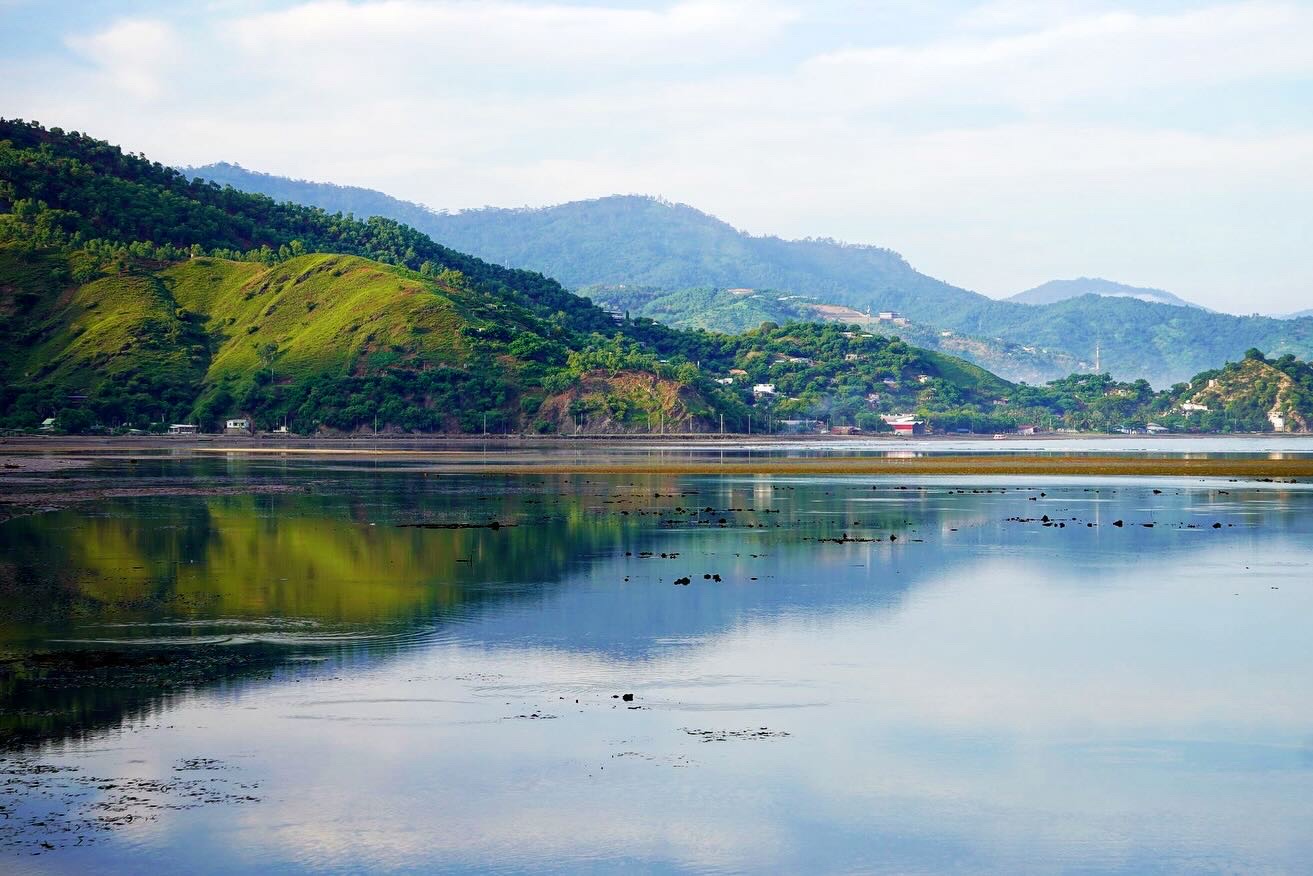
In February 2024 I moved from New Zealand to Dili, the capital of Timor-Leste. I was there with my partner volunteering at local NGOs through Volunteer Service Abroad, a New Zealand NGO that does amazing work in the Pacific and Timor-Leste. After ten days I published my first impressions of Timor-Leste. After a month here, and after having the opportunity to spend a week outside of Dili, I thought I’d share a few more insights about living in this fascinating but little known country.


Dili is a bubble compared with the rest of the country. This I knew but experienced it first hand when I spent a week on Atauro Island, which despite being a 1.5 hour ferry ride from Dili, felt like another world. Only around four of the dozen or so villages on the island have electricity (and then for only 12 hours a day), most of the villages are not accessible by road, only by walking, and a number have an unreliable water supply. Staying in homestays was quite an experience. The facilities and food were on a par with the most basic I’ve stayed at (comparable with remoter parts of Papua New Guinea and Ethiopia). This is how the vast majority of Timorese live, reliant on subsistence farming on difficult land – hilly, prone to erosion, with often too much rain in the wet season for vegetables, and too little in the dry season. These issues are only going to get worse in the coming years with climate change and the forecast tripling of the population by 2050 from the current 1.3 million people. Timor-Leste has done incredibly well given the challenges it inherited as a tiny new nation, but the future here is very uncertain.


Life in Timor-Leste is not for the squeamish. On the ferry over to Atauro Island I took sandwiches for a snack. When I opened the plastic bag I found a gecko had snuck in there, we were both surprised! If you use a knife for peanut butter it needs to be washed immediately otherwise within minutes ants will smother it. The grossest moment so far was reaching up for the blender to make a smoothie and finding it covered in ants. At first glance it appeared that a piece of fruit had been left in there from the day before. It turned out though to be a dead gecko. I’ll spare you the photos…
There are almost no private businesses of any scale in Timor-Leste. Around 90% of the country’s wealth comes from offshore oil and gas, which is running out. The second largest source of income is remittances from Timorese who have moved overseas (the largest group of around 20,000 live in the UK). The International Monetary Fund has described Timor-Leste as “the most oil-dependent economy in the world”. They have been attempting to diversify into coffee, agriculture and tourism, but progress is slow. In 2019 around 75,000 tourists visited Timor-Leste, ranking it in the least visited 20 countries in the world, comparable to Sierra Leone and the Central African Republic.
Everything takes a while, so patience is important, though apparently things have improved significantly in recent years. Getting my Timorese driving license involved taking various bits of paperwork (which you had to photocopy yourself at shops across the road) between four different areas in the licensing building over the course of a couple of hours, which was great for job creation, less so for efficiency. You also have to be smartly attired!


I am very fortunate to have access to good health care, something the vast majority of the population doesn’t have. Still seeing someone involved waiting for an hour (I was second in line), and then less understandably it took an hour for the paperwork and bill to be sorted out. The medical centre didn’t have the medicines they prescribed so I had to try a few different pharmacies around town to get what I needed. These are minor inconveniences compared with what Timorese have to cope with on a daily basis, but it illustrated to me the size of the gap between the developed world and the rest. Growing up in rich countries it is so easy to forget what a fortunate position that is, one that isn’t shared by much of humanity. Hopefully I can help Timor-Leste in some small way during my time here volunteering with a health NGO and promoting travel opportunities in Timor-Leste.
Timor-Leste is almost completely a cash culture, which feels like going back in time by twenty years. In New Zealand I haven’t used cash for years, everything is electronic via card or online payments. Here very few places accept credit cards, and only VISA. Since ANZ pulled out of retail banking a number of years ago MasterCard hasn’t been accepted anywhere in Timor-Leste.
There appear to be no planning laws in Timor-Leste, with people able to build pretty much whatever they can construct. There is also no approved city plan for Dili to guide where infrastructure goes, so city resources are increasingly under strain as the population grows without corresponding investment in water, transport and electricity (although this statement could also apply to New Zealand!).


The climate does things to your body. I’ve always lived in temperate and relatively dry places so the heat and humidity in Dili was a shock to the system. After a month I think I have adjusted to a degree, coping better though it is still normally too hot for comfort. Heat rash across most of my body for a couple of weeks was not ideal though. It is caused by sweating, which is hard to avoid here!
I have a very international set of friends here, even more so than in New Zealand which is one of the most international countries in the world (based on the percentage of people who are immigrants). The Saturday Dili Walkers Facebook group includes Timorese, Japanese, Korean, British, New Zealanders, Australians, Portuguese, Chinese and other nationalities. The majority are here with international development agencies (either paid like the UN or volunteers like Peace Corps, Australian Volunteers International, and Volunteer Service Abroad) and the various embassies.

I never look at the weather forecast in Dili, whereas in New Zealand I’d look at it multiple times a day. This both relates to the accuracy of the forecasts, and that the weather in Dili is basically the same everyday, with near constant temperatures, and the only variable is whether it’ll rain late afternoon or not.
Timor-Leste feels incredibly safe, with almost no hassle for money or perceived threat, which is a little surprising in some ways given the obvious wealth disparity between malae (foreigners) and locals. This is probably in part due to the significant international support Timor-Leste has received over the years, including during the years of Indonesian occupation, extensive rebuilding following their exit (80% of Dili was destroyed in the process), UN peace keepers, and on-going international development aid and investment. There is also a strong sense of family here, and the Catholic faith is an important part of society.
In some ways the public transport system here works better than many places in the developed world. The microlet buses only cost 25c a ride, they stop and pick up anywhere on route, and are so frequent that I’ve rarely waited more than a minute for one to appear. The downsides are that they are rather small and cramped inside (particularly for tall malaes), they don’t run after dark, they often have near deafening music playing (with a lot of bass!), and the vehicles generally appear to be falling apart (the money has obviously been spent on the sound system rather than maintenance).


Life is loud here, with no noise restrictions or etiquette it appears around when might be an inappropriate time to crack up the bass, for example 4am on Sunday…


Leave a Reply