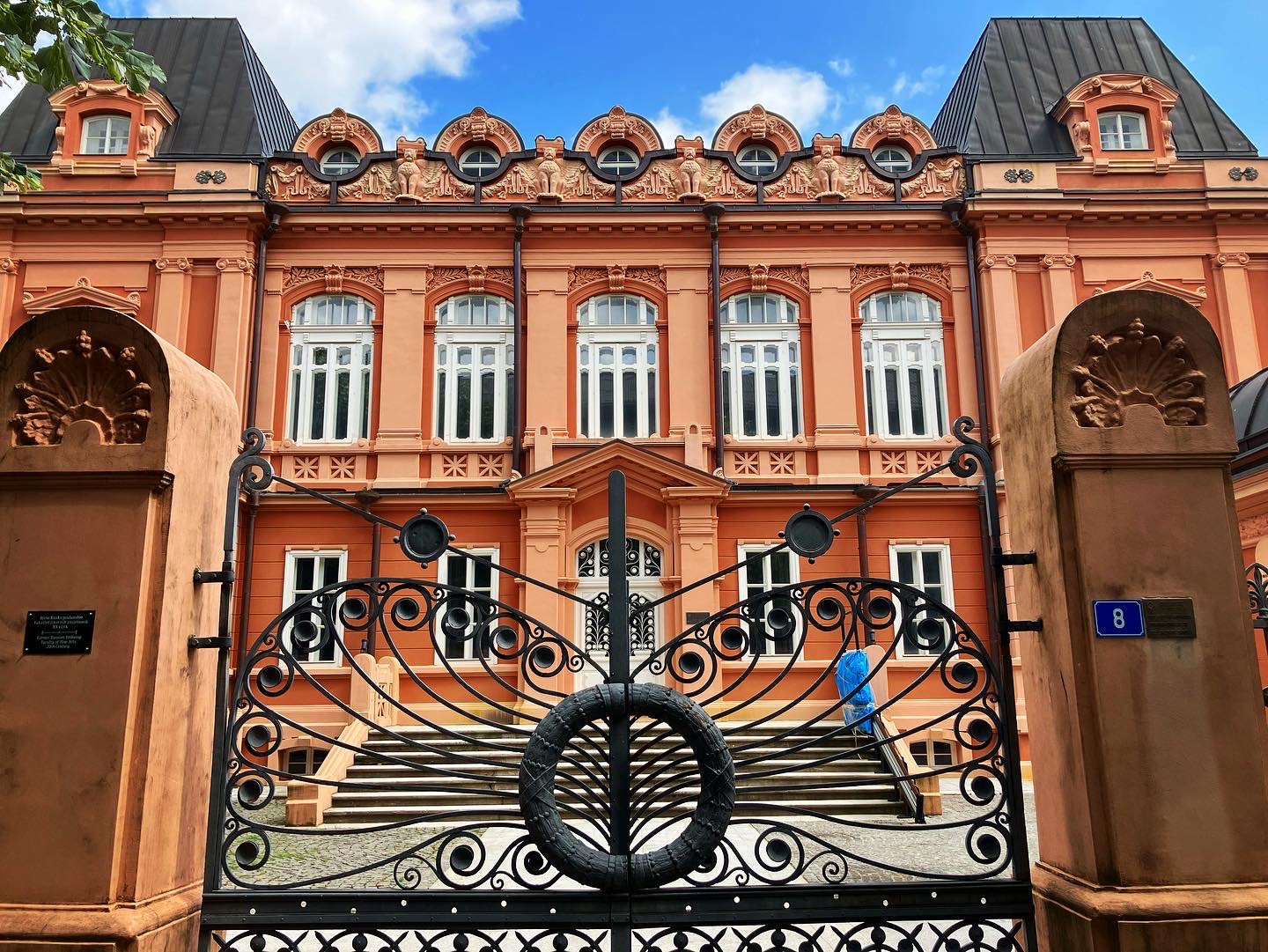
The former capital until 1946, Cetinje was one of my favourite places in Montenegro. It was compact, and filled with lovely buildings and interesting museums. The old town centre is pedestrianised, and there isn’t much traffic anywhere else. A day there was the perfect amount of time to see literally everything.


The best views of Cetinje are from Eagle Rock, which felt harder to climb that it should have been due to the heat when I visited in mid June 2023. It offers panoramic views of the town below and Lovcen National Park in the hills behind.


It is also home to the tomb of Vladika Danilo, a 19th Montenegrin monarch.

And home to these geckos spotted while taking shelter from the sun.


All the main museums of Montenegro are in Cetinje. The National Museum of Montenegro offers a reasonable introduction to the country’s history, from the ancient up to independence from Serbia, which much more recent than I expected.


Opposite is the Billiard Palace, the former residence of Peter II Petrovic, who during his reign promoted development in Cetinje. To be honest this was the least interesting of the museums, but did have some good clothing displays.


Next to the Billiard Palace, the Relief of Montenegro was much more engaging. It is a huge scale model of the country, demonstrating clearly how mountainous it is. A few place signs wouldn’t go amiss, though it was fun working out where I had been, and was going to, on my fortnight in Montenegro.


The King Nicholas Museum was the palace of the former king, simple and effective outside, quite luxurious inside. He was responsible for much of the development of Cetinje as an important centre for Montenegro.


The Ethnographic Museum of Montenegro was small but had a well displayed collection.


The Money Museum was an unexpected gem. It told well the story of money, both internationally and in Montenegro, from ancient times to the introduction of the Euro.


The only museum I didn’t make it to was the National Art Museum, despite walking past it several times, and it being a prominent modern building in the middle of a heritage precinct. It didn’t have any obvious signage though, the sticker on the glass looked more like a For Lease sign in Montenegrin…

It was rare for me to share any of the museums with other people, but there were plenty of people (including tour groups) visiting the Monastery of St Paul. This is the most famous Orthodox monastery in Montenegro, re-built in 1785. As a non-religious person there didn’t appear to be much to see to be honest, and photography isn’t allowed inside.


The nearby Castle Church was attractive, both inside and outside.


The Vlaška Church was closed unfortunately but was set well surrounded by greenery, opposite a monument to a maritime disaster.

A highlight of Cetinje was the architecture, with lots of heritage buildings. Many of them are former embassies, dating from pre-1946. The grandest is the colourful Russian Embassy.

The French Embassy had an unusual design, apparently meant for another country but there was a communications mix up!


The British Embassy was another prominent example.

Others included the Cetinje City Hall, Djukanovic Palace, and the Ministry of Culture.


To finish with the rather lovely Blue Palace, official home of the President of Montenegro.


Leave a Reply to jontycraneCancel reply