To the west of Dili, Liquiçá is renowned for beautiful beaches, great snorkelling & diving, and historic Dutch and Portuguese colonial buildings in Aipelo, Liquiçá, and Maubara.
Built by the Portuguese in 1889 (and expanded in 1914), Aipelo Prison was used to house criminal and political prisoners from across the Portuguese colonial empire, including from as far away as Macau, and was in operation until 1939. It was the site of torture and common mistreatment of prisoners, including mixing broken glass with inmates’ food. Appropriately Ai Pelo means ‘bitter water’, referring to the abuses that took place here. During WW2 the site was used as a command centre by the Japanese, before it fell into disrepair. In 2012 the site was restored and information panels (a rarity in Timor-Leste!) were installed. The planned museum, shop and restaurant have yet to be built, and the front gate appears locked most of the time, but the site can still be easily accessed and explored.


Liquiçá is the largest town in the municipality, home to around 5,000 people, and many historic buildings in various states of disrepair. The town was heavily damaged by the Indonesians when they left in 1999, and was the site of one of the most notorious events of that period. Up to 200 Timorese were massacred by Indonesian militia as they sheltered in priest’s house next to the Church São João de Brito.


The church has since been restored, and opposite is the well maintained Parque de Liquiçá, home to an Uma Lulik (traditional Timorese sacred house) and various monuments and statues.


By the park is the beautiful former residence of the colonial administrator of Liquiçá.

The main cemetery seemed surprisingly small for the size of the town.

Larger was the Jardim dos Heróis de Liquiçá, for Timorese who died during the struggle against Indonesia for independence.


Uma Knua was a pleasant place to stop for lunch by the sea.


At the entrance to Liquiçá is this interesting memorial to a hero of the Timorese independence movement.


About 50km west of Dili, Maubara has plenty of interest to explore. It is best known for the Dutch Fort built in 1756, which was swapped with the Portuguese for the island of Flores in 1859. The impressive walls and a couple of cannons remain, and inside are huge trees and a late 20th century building home to a restaurant and handicrafts store run by a local women’s collective.


Opposite the main entrance can be found more wonderful handicrafts.


Close by is Maubara Church, built between 1887 and 1897 in neoclassical style.


Just up the road is the surprisingly large Maubara cemetery.

A short drive (requiring a 4WD or motorbike) inland is Pousada de Maubara, a 19th century Portuguese fortified structure, turned impressive house. It is currently being restored by the Maubara Mos Bele Association to turn it into a hotel.


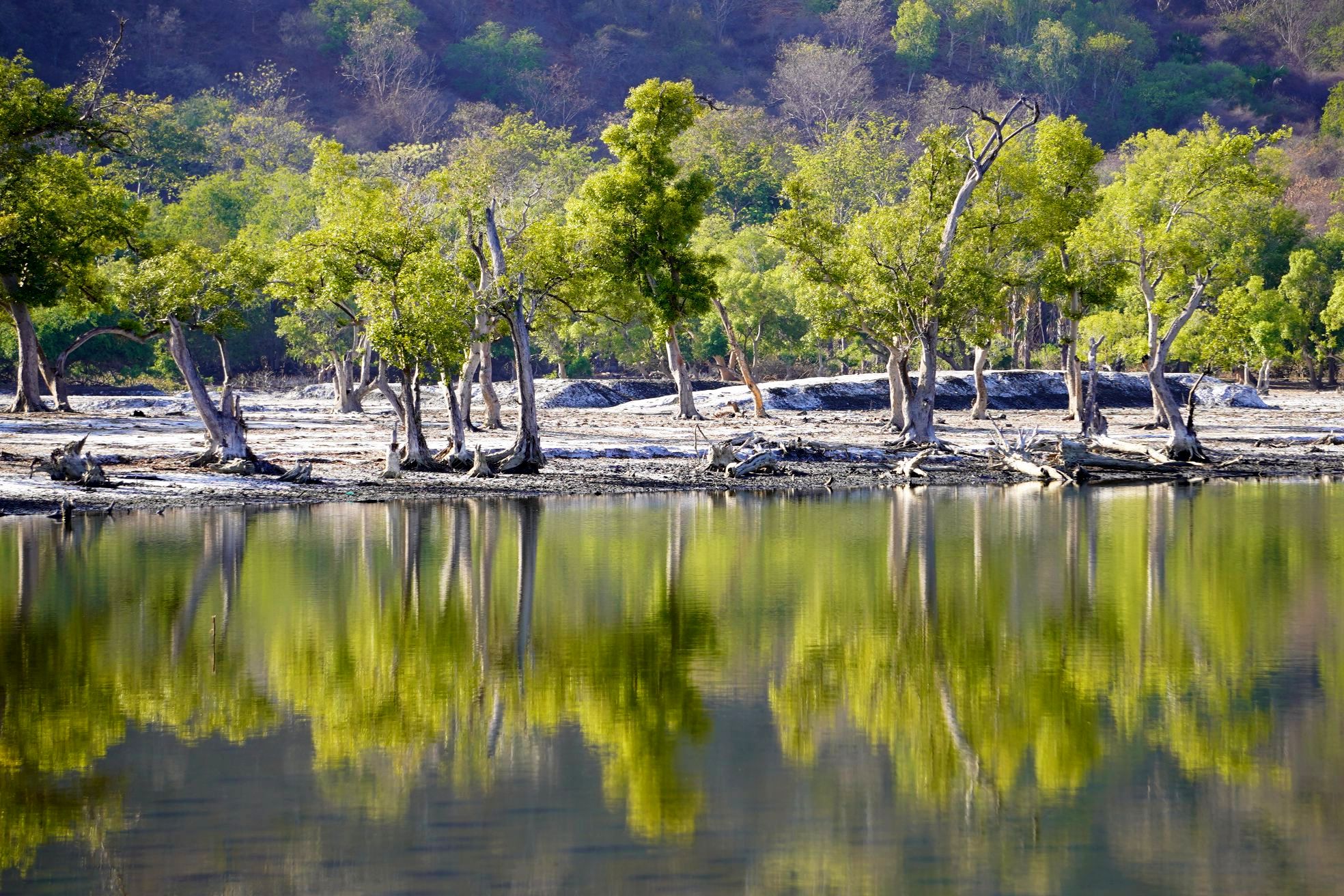
On the outskirts of town Lake Maubara is well worth stopping at, to enjoy the tranquility and reflections.


There are some beautiful hills in Liquiçá, with the road to Bazartete (from Aipelo, not the awful road from Liquiçá town) being a good way to explore them.


Enterprising locals have sent up some lookouts.


In Bazartete is the sizeable Igreja Quase Paróquia São Francisco Xavier.


And nearby an attractive shrine to the Virgin Mary, Gruta Nossa senhora de Graca Bazartete.


Tibar Bay Port was the largest infrastructure project in Timor-Leste’s history when it opened in September 2022, replacing Port of Dili as the main port for the country. It was the country’s first public-private partnership, with Bolloré Group gaining a 30 year concession to build and operate the container port. The view of the bright red cranes is particularly impressive when approaching the port from Liquiçá.

On the drive back it was good to stretch the legs at Capela Nossa Senhora Estrela do Mar and take a quick look around.

To finish with the beautiful Liquiçá coastline close to Dili.


Leave a Reply