A smaller, greener, and cleaner version of Jakarta, Surabaya wouldn’t be on most tourist itineraries of Indonesia but it has a few places of interest. It may be third of the size of Jakarta but it is still home to 3 million people, and 10 million people live in the Surabaya region, making it the second largest city in the country.
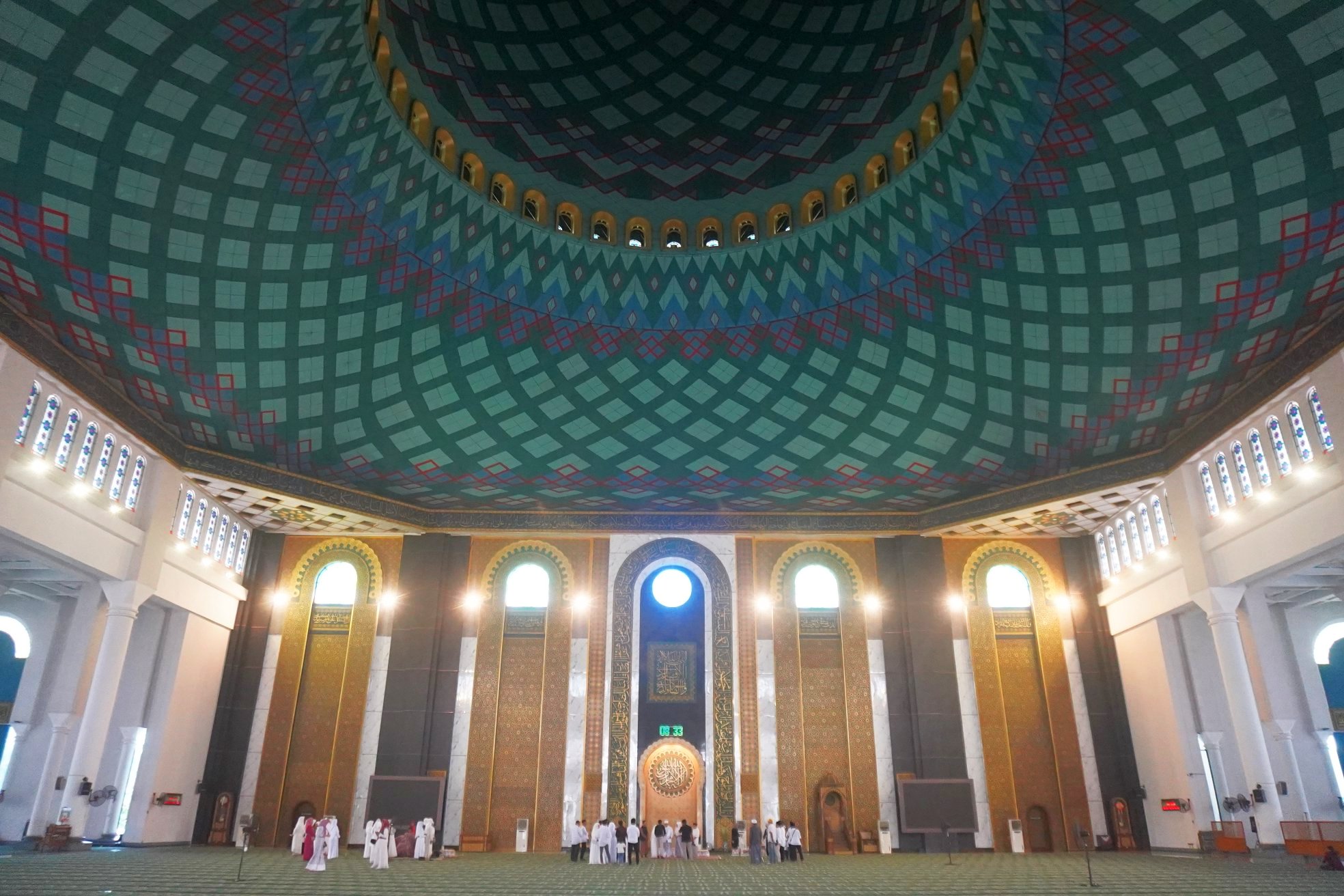
The highlight for me was visiting the impressive al-Akbar National Mosque Surabaya. It is the second largest in Indonesia after the Istiqlal Mosque in Jakarta in terms of maximum capacity. Construction started 1995, and finished in 2000.


For a small fee you can take an elevator up the 99m Minaret for good views of the city, which felt basically low-rise and flat other than the occasional skyscraper.


Muhammad Cheng Hoo Mosque is probably the most unusual mosque I’ve ever visited. Named after the great Chinese admiral, it looks more like a Chinese temple, has a model ship at one end, and is literally next to a large basketball court, quite a surreal combination!


Unusually I splashed out on accommodation and stayed at the historic 5 star Hotel Majapahit Surabaya. Opened in 1910, this was one of the great Asian hotels set up by the Sarkies family, along with Raffles in Singapore. It is a huge place, expanded in 1923, 1926, and with an Art Deco lobby extension in 1930.


Across the road from the hotel is the flash Tunjungan Plaza, the second largest mall in Indonesia, with more than 500 stores. It started in 1985 and now covers more than 150,000m2, and on a Saturday night was the place to be for locals. For a predominantly Muslim country, Indonesia is keen on Christmas decorations.


ITC Mega Grosir Surabaya was quite the contrast, an old school mall dating from 2006 originally. It felt much more budget than Tunjungan Plaza, but was still a popular place to be on a Sunday morning.


The Sunan Ampel Great Mosque is the oldest mosque in East Java, dating back to the 15th century, and is named after the mosque builder Sunan Ampel, whose tomb complex is next door.


The Middle Eastern Pasar Ampel markets run from the mosque.


Many of the narrow side streets in Surabaya were marked with a variety of interesting entrances.


Hong Tiek Hian Temple is the oldest Chinese Buddhist temple in Surabaya, and well worth exploring.


The moderately diverting Siola Surabaya Museum tells the story of the city. It is located in what was built in 1877 as a department store, but was turned in 2015 into a home for the museum.


To finish with a few photos from exploring the city on foot, a slightly easier if less interesting experience than in Jakarta, but neither are really suited to walking.


Leave a Reply