I spent the best part of a month in Ladakh, in the Indian Himalaya in August 2025, and another week back in 2019. These are some of the things I learnt about this fascinating part of India.
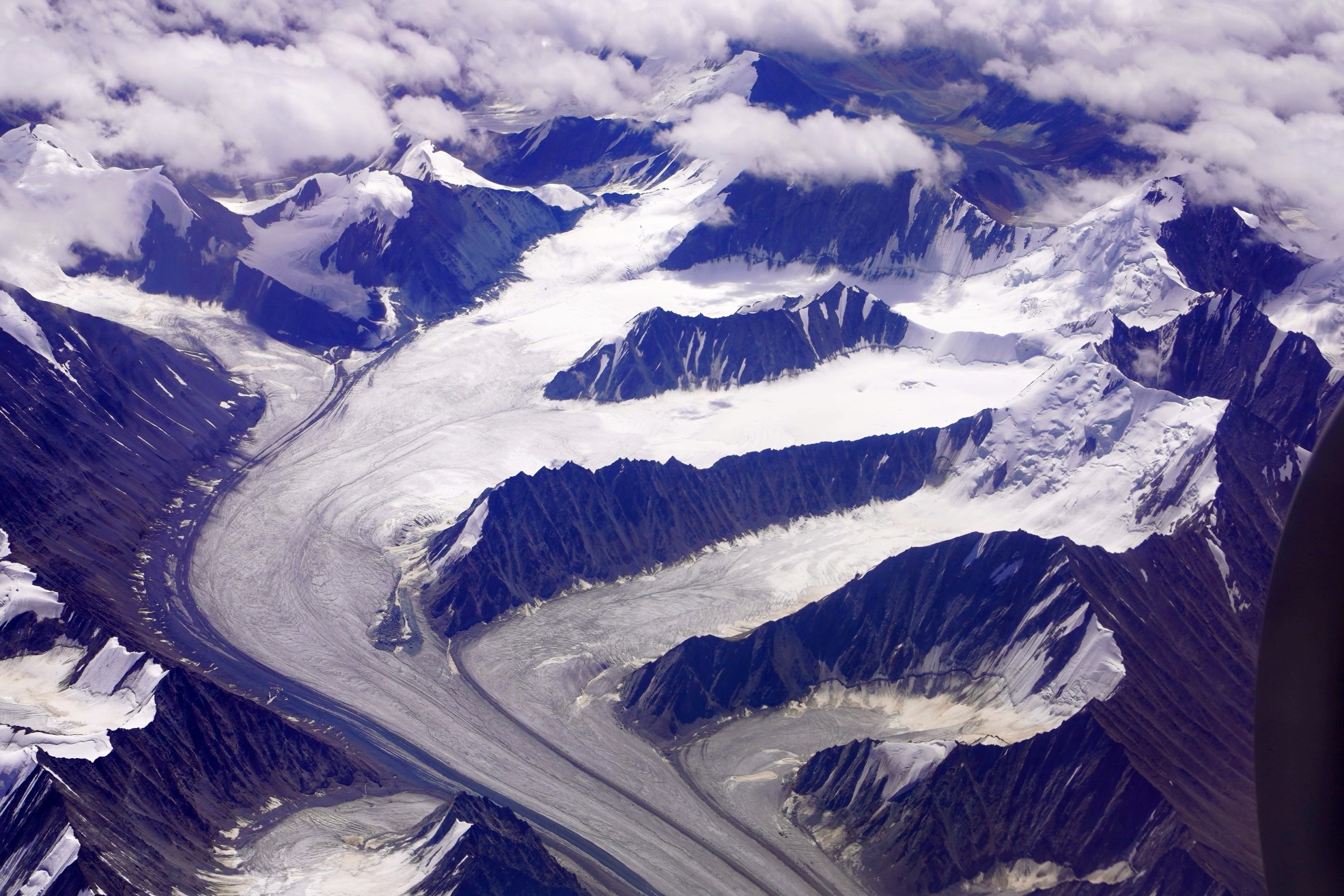
There are now ~15 commercial flights a day into Ladakh, most from Delhi. The vast majority are in the morning as it gets harder to take off in the afternoons at altitude (Leh is at 3,500m above sea level) as the land and air warms. The airport is currently being expanded as there are only two parking spots for commercial flights, which can easily cause delays, particularly when there are military operations underway. The flight between Delhi and Leh is incredibly scenic, starting with vastness of Delhi.


Before heading over the mountains, glaciers and lakes of Ladakh.


Ladakh, and particularly Leh, is having a tourism boom. The difference was noticeable since my last visit in 2019, with so many more hotels, restaurants, and shops. Ladakh has been popular with westerners for decades but post Covid there appeared to be a lot more domestic tourists.


Ladakh borders both Pakistan and China, and is a highly sensitive and therefore militarised area. The only airports in Ladakh are military airports, with some access by commercial operators. There are many large military bases throughout the region, and Indian army vehicles in green (not very well camouflaged against the grey rock of Ladakh) are a regular sight on the roads. Understandably care needs to be taken when taking photos, and of any bridges in Ladakh.
Many of the roads in Ladakh are managed by the Border Roads Organisation (BRO), part of the Indian Ministry of Defence, who are responsible for roads in India’s remote border regions. Given the terrain they do an impressive job, with huge resources invested, primarily for military purposes I assume.


Along the roads they have entertaining safety signs saying things like “Love your neighbour, but not while driving”, “safety on road, safe tea at home”, “mountains are for pleasure, if you drive with leisure”, “better to be mr late than late mr”, “normal speed meets every need”, “donate blood but not on the road”, “drive like hell and you will be there”, “I am curvaceous, be slow”, “after whisky, drive risky”, “drive fine, no fine”, and “don’t gossip, let them drive”.

Historically the Kingdom of Ladakh had strong ties with Tibet, and the influence continues with around ten thousand Tibetan refugees on the outskirts of Leh, and five Tibetan refugee markets in Leh. They are able to get a special Indian passport, and the climate and life in Ladakh are much closer to Tibet than in McLeod Ganj, where the Tibetan parliament in exile and the Dalai Lama are usually based. The Dalai Lama has a residence in Leh, pictured below, where he is spending an increasing amount of time for health reasons.


One noticeable change I found since my 2019 visit is that the vast majority of monasteries now prohibit photography inside the temples, though outside areas are fine. Presumably this is due to the increase in the number of tourists and to protect the delicate paintings that cover the temple walls.
Only Ladakhis can buy property, but many Indians (and Nepalese) work in Ladakh during the peak season over summer, when there is less tourism elsewhere during the monsoon season.
In 2019 Ladakh was separated from Jammu and Kashmir and made a Union Territory. Both Ladakh and Jammu & Kashmir are under the authority of Delhi, but only Jammu & Kashmir has a local legislative assembly — Ladakh has no elected legislature or chief minister.
Getting a SIM card that works in Ladakh is a challenge. eSIMs and SIMs bought in other Indian states won’t work in Ladakh, you need to buy one locally. Jio had the best coverage for the hiking route we took, so we headed to their offices about 15 mins drive south of central Leh. A month long plan with 1.5Gb a day was amazingly cheap, only 500 rupees but it took the best part of four hours over two days to get the SIM card. It was a time consuming process requiring your passport and a very specific eVisa page (which isn’t provided when you get the eVisa but needs to be tracked down on their website) physically printed out. The server went down the first time I tried so I had to return another day.
Ladakh in the summer is very dusty and dry, which is tough on the eyes and sinuses. Drinking plenty of water and wearing a buff helps.
There are plenty of street dogs in Leh, mostly well behaved during the daytime when they were struggling with the heat, but at night packs could be heard roaming the streets. Cows are also free to wander the streets, as elsewhere in India.


Construction typically uses wooden scaffolding.


Ladakh has an incredibly dry and barren landscape, with basically no trees until poplar and willows were introduced.

There are some huge rivers including the Indus and Zanskar but most of the water has too much sediment to allow irrigation without filtration.
It was wetter than expected given the dry, arid climate, with light rain on a number of days in August. Toward the end of my hike, in the last week of August, there was the first snow in August in Ladakh in 15 years, which led to many road closures, and me being stuck in a remote part of Ladakh for three days. Hopefully it is another 15 years before this happens, but I suspect with climate change this may be optimistic.


Marmots live in Ladakh, which I wasn’t expecting, having last seen them in the Swiss Alps. More expected and commonly seen were blue sheep (which are really more like goats) and yaks. Snow leopards live in Ladakh, but the best chance of seeing them is during the freezing winters.


Leave a Reply