The start of a tough but magical 2 & 1/2 day hike, which included two natural hot springs, the highest waterfall in the country, remote villages, mountain tops, and spectacular scenery throughout. As with all my multi-day hikes in Timor-Leste, this wouldn’t have been possible without excellent support from the team at Eco Discovery.
It was a bumpy but scenic 5 hour drive to reach the starting point of Tapo, a remote hamlet in the Bobonaro mountains.


We camped inside the local government building, and endured very loud frog song all night! There are almost no camping sites in Timor-Leste, so it is more common to ask the community leaders for permission to camp at schools or government offices.


An impressive sunrise was a good way to start the first day of hiking.

From Tapo we headed steeply uphill toward the summit of Mt Abendudatoi. The morning light across the landscape was stunning.


These mushrooms were eye catching.

We headed through thick forest which reminded me of being back in New Zealand, with lichen hanging from the trees.


This was my first, and hopefully only, experience with stinging nettles in Timor-Leste.

The forest offered welcome shade but it was good to get back into the open with views like this.


And allowed me to get my drone out for some different perspectives on the landscape.


This distinctive mountain is Mt Loelaco. It is particularly dangerous to climb, so best enjoyed from a distance.

After hours spent on an often overgrown and tough path it was initially a relief to do some road walking, though the lack of shade made it pretty wearing.


We skirted around the edge of the only settlement visited on this day.


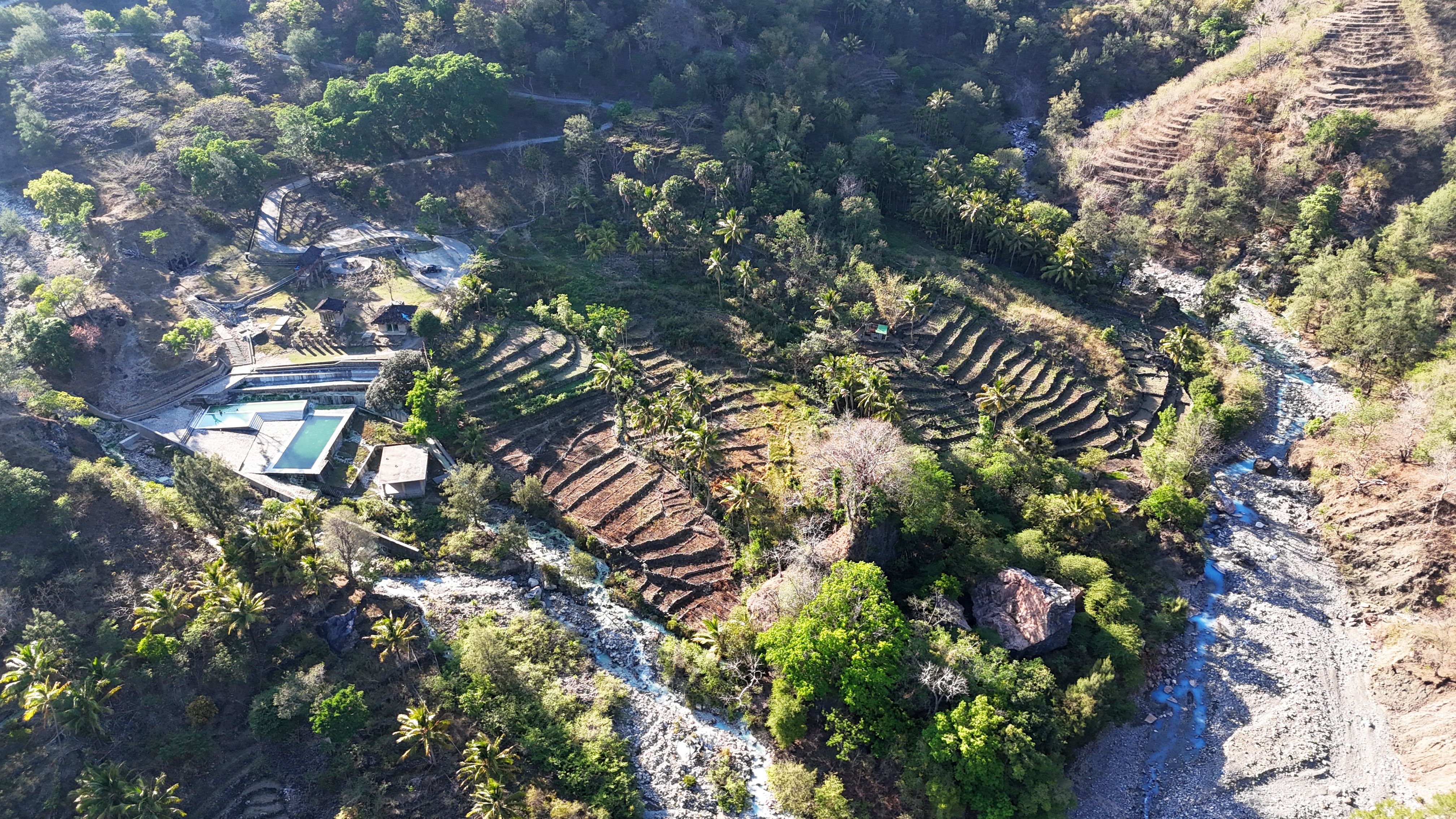
Our destination was the Marobo Hot Springs, spotted well before we reached it, with a steep and slippery descent required.

I don’t know what these trees are, but they’re pretty unusual.

A bonus of hiking to the Marobo Hot Springs (almost everyone drives along a rough road to reach them) was finding these natural springs further along the river from the hot springs.


It was a relief to reach Marobo Hot Springs, where we would spend the night. These are the best known hot springs in the country. They were developed by the Portuguese, with a resort complex built around the pools, but fell into disrepair. In 2016 the whole complex was redeveloped, but little maintenance appears to have taken place since. As of 2024 the toilets are completely out of action, and derelict buildings surround the pools.


The hot springs produce ~2,000 litres of water per minute. There are three pools, one very hot (up to ~50C), one hot, and one colder. It was refreshing to a degree taking a soak, but hot springs in a cold climate are more enjoyable than in a hot climate.


Leave a Reply