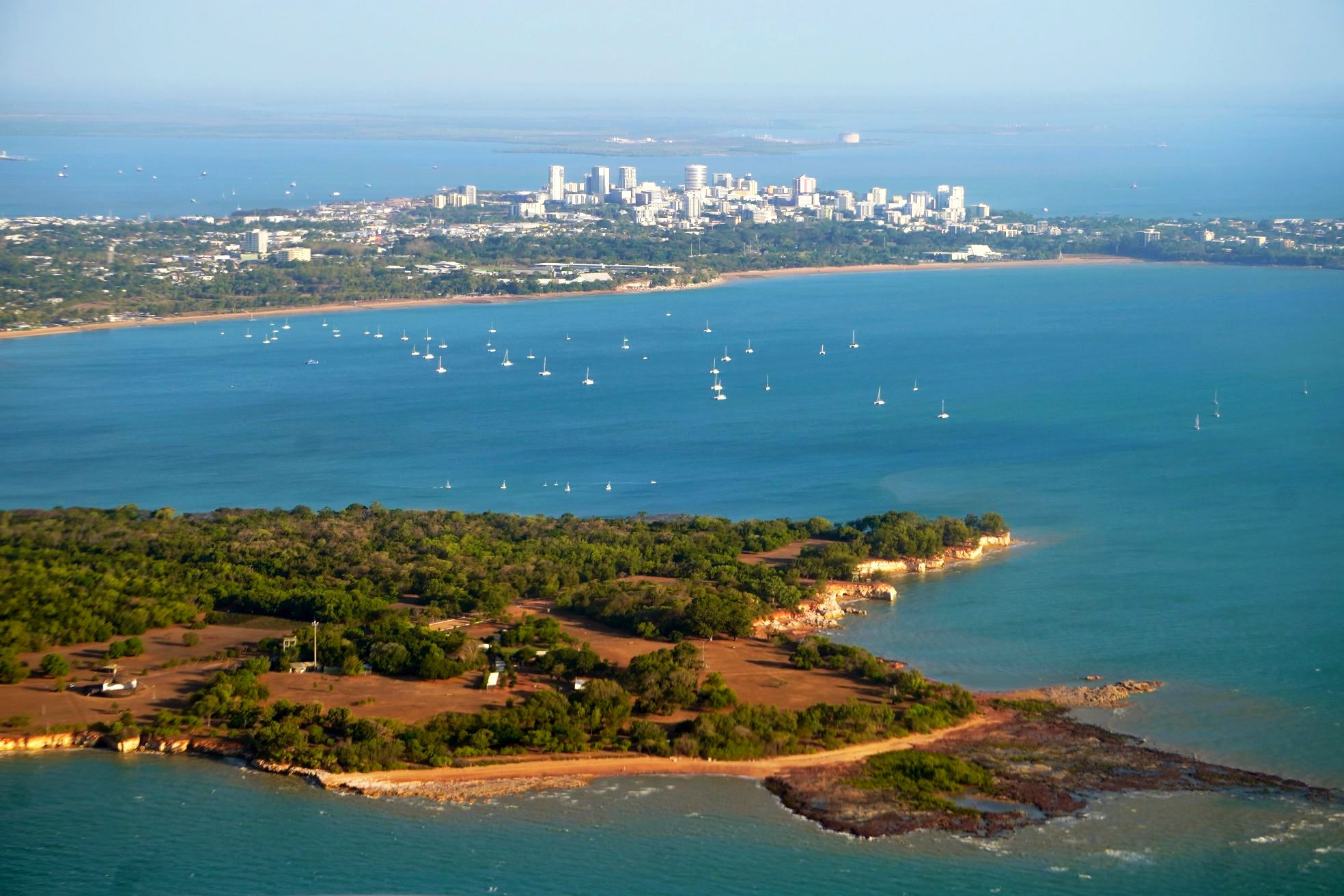
The first time I visited Darwin was in 2015, but I only had an afternoon to take a quick look around the central city. I returned in September 2024 with more time, and more importantly a hire car, allowing me to get a better feel for the capital of the Northern Territory. I found it a pleasant place to explore, and a good base for visiting Litchfield and Kakadu National Parks, but it isn’t really a destination city.


George Brown Darwin Botanic Gardens was a good place for a morning walk, though it looked like they’re behind with their maintenance schedule.


Heading into town I remembered Bicentennial Park from my last visit, a pleasant stretch of greenery by the coast. The sea looked inviting but is too popular with crocodiles to be safe to swim in.


The Northern Territory has some reasonably grand government buildings, including the Legislative Assembly and Supreme Court.


Government House is the oldest European structure in Darwin, though it only dates back to 1871. Much of Darwin was destroyed by Cyclone Tracy in 1974, though good design has prevented a repeat.

Survivors Lookout is one of many places in Darwin that tells the story of the Japanese bombing of the city in 1942. It seems by far the most significant event in the history of the city, covered by multiple memorials, displays, and museum exhibitions.


Darwin Waterfront Precinct caught my eye back in 2015, with flash apartments and two crocodile free pools. One is free to use, the other charges, as it has a wave machine to allow surfing without getting bitten.


At the end of Stokes Hill Wharf, a rather hot and shadeless walk from the Waterfront Precinct, is the Royal Flying Doctors Service (RFDS) Darwin Tourist Facility. This covers well the history of the RFDS into what is a huge operation these days, with custom built planes, and world class medical facilities. It also covers well the Japanese bombing of Darwin, much of which happened at Stokes Hill Wharf, with VR headsets providing an immersive experience.


Thanks to my childhood I have soft spot for planes, which made Darwin Aviation Museum a priority for me to visit. It was a pretty standard aviation museum, with a hanger filled with as many planes (and parts of planes) and huge amounts of information.


The highlight was a B52 bomber, one of only three to be found outside of the United States (the others are in South Korea and the UK), illustrating the strong military ties between Australia and the US.


Final stop was the worthwhile Museum and Art Gallery of the Northern Territory, home to a varied collection including a huge stuffed crocodile, artwork, and wildlife of the region. Unfortunately the exhibition on Cyclone Tracy was being renovated when I visited. This appears to be far less of a tourist attraction than the 1942 Japanese attack on Darwin, with little other information available.


Leave a Reply