One of the holiest and most contentious places on earth, the Old City of Jerusalem is a hugely historic area, significant to Christians, Jews and Muslims. Visiting it can be overwhelming, in terms of the maze of streets and number of people, including many tour groups.


There are four main gates into the Old City, and a number of smaller gates. The Damascus Gate was the original entrance to the city, but the current walls date from the Ottoman period.


Jaffa Gate dates from the same time, and lies close to the similar vintage Citadel.


The old city walls remain mighty.


Armenia was the first Christian country in the world and has its own quarter within the Old City.


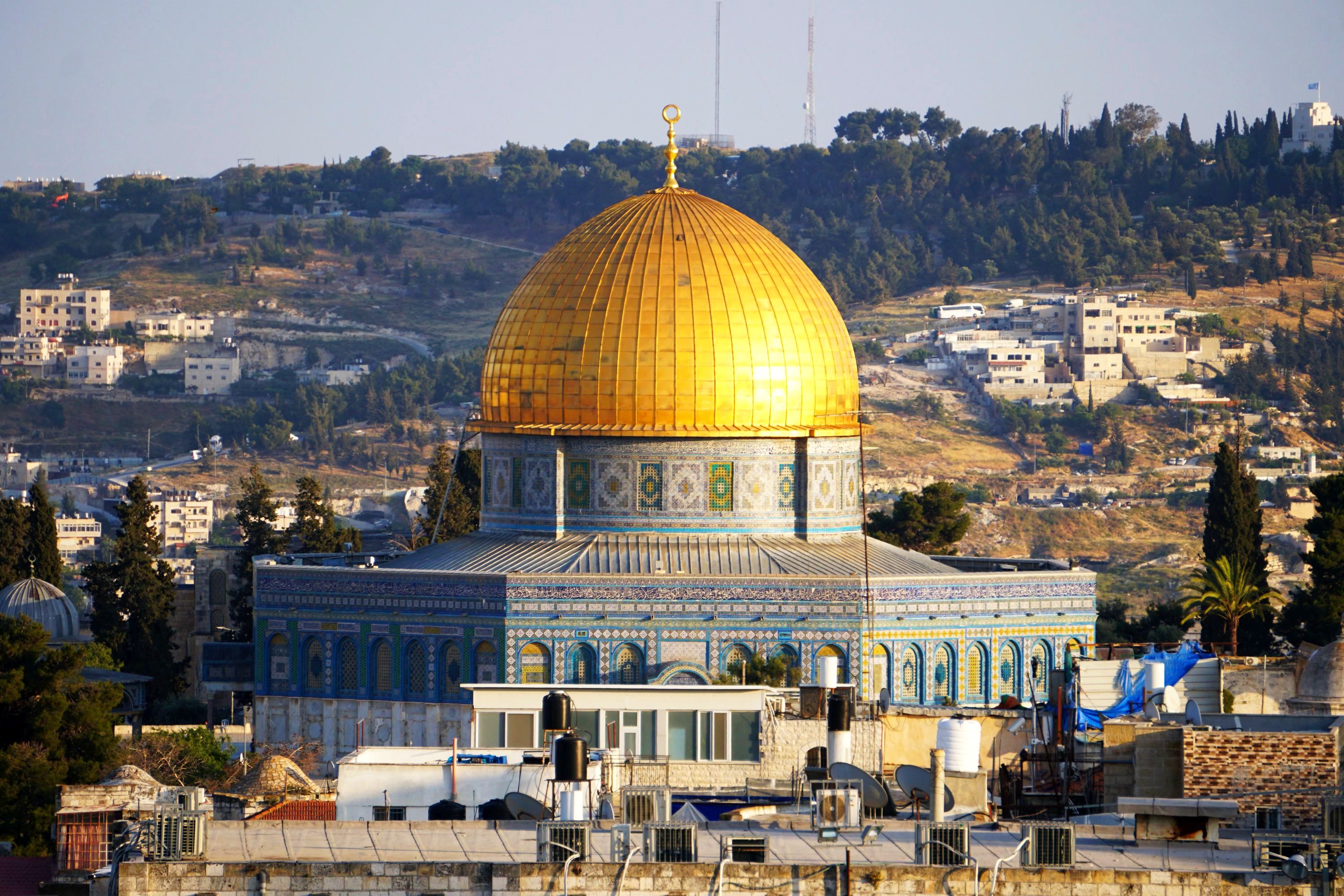
The most famous and controversial place is the Temple Mount, once home to the Second Temple of the Jews, built by Herod the Great, now home to mosques and the Dome of the Rock.


It is a vast site, the size of 30 football fields, which was unexpectedly quiet and calm, despite the presence of a large number of armed police. I visited it on Jerusalem Day, a particularly contentious celebration of the integration by force of Jerusalem in 1968 after decades of partition. Groups of Nationalist Jews were carefully escorted by armed officers around the outskirts of the site.


The Dome of the Rock was one of the first Muslim buildings in terms of architectural style, though similar in design to a church and built in part by Armenian craftsman. It is a stunning building.


It’s golden dome is visible from everywhere around Jerusalem.


The Western Wall of the Temple Mount is deeply sacred to Jews, as the closest point to the Holy of Holies section of the Second Temple. It was quite surreal seeing such a well known place in person.


Less than 10% of the Western Wall is still visible above ground, the rest has been long buried as the city has developed. The Western Wall Tunnel Tour – The Great Stone Tour is a fascinating way to see the rest of the wall, large parts of which have been excavated. The hour long guided tour (book at least a week in advance and note that their website doesn’t work on the Sabbath) explains how the Temple Mount was built and it’s history.


The Jewish Quarter was home to Roman remains, with older further below the ground, shown by some of the shafts dug.


There was a noticeable change stepping from the Jewish Quarter into the Muslim Quarter and their extensive markets.


The Via Dolorosa is the route that Jesus is believed to have taken on his way to his crucification. There are fourteen station marking significant points along the way, with the Church of the Flagellation being the second station.


The final five stations are in the Church of the Holy Sepulchre, best approached through the atmospheric Ethiopian Monastery. Ethiopia was the second country in the world to convert to Christianity, and the two rooms accessible in their monastery were much like the churches I visited in Ethiopia.


The Church of the Holy Sepulchre is a fitting place to finish, as one of the most sacred sites in Christianity, believed to be the site of the crucification. It is unwieldily owned and managed by six Christian churches – Catholic, Greek Orthodox, Armenian Orthodox, Syrian, Coptic and Egyptian.


It is one of the most confusing and hectic religious places I’ve ever visited, filled with a mixture of the devote and curious. There is plenty of gold and silver, and religious icons, along with the empty tomb of Jesus. It was an experience to visit, but strange one.


Leave a Reply