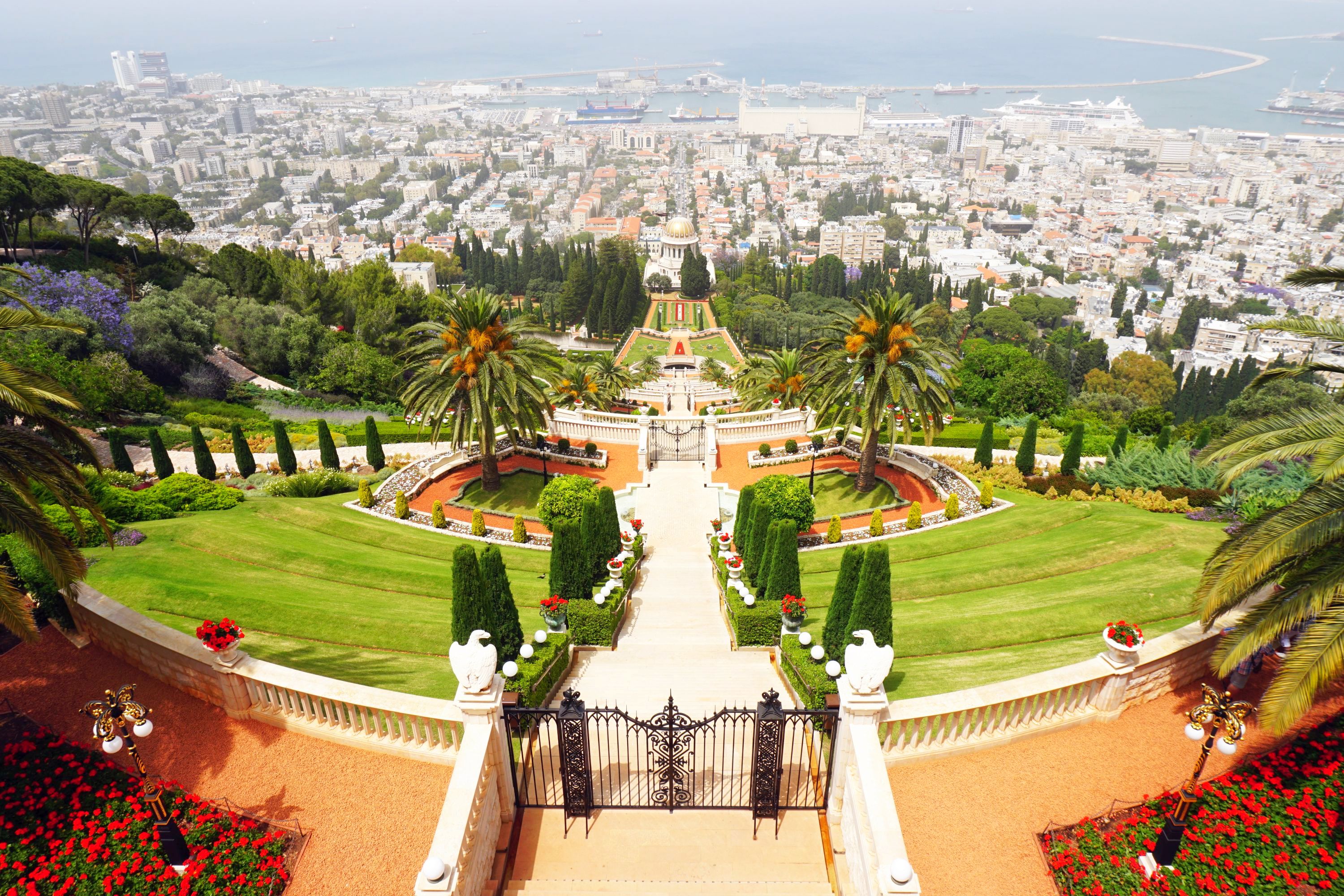
A post covering Israel’s north coast, home to its third largest city, Crusader fortifications, a Roman city, and natural beauty on the border with Lebanon. To start with Haifa, Israel’s main port, a bustling place that spreads up the 546m high Mt Carmel, becoming less industrial and more desirable with altitude. By far its most famous sight are the incredible Baha’i Gardens, some of the most beautiful in the world.


Unfortunately I was in Haifa on a Monday when all the museums are closed and the free garden tours don’t run, but I could get an idea of them from a terrace at the top. Below are eighteen more terraces leading to the tomb of the founder of the Baha’i faith.


The neighbouring Rosen Gardens can’t compare, but Louis Promenade provides more expansive views of the city below, and I loved the funky elevated building.


The Hadar District is the grungy downtown area, which wasn’t very inspiring at first but Haifa City Hall was photogenic, as was the nearby HaZikaron Garden. There is much more to Haifa than I had time to see, another day (not on a Monday!) would have been good.


Rosh Hanikra was worth a quick explore. On the border with Lebanon (though there is no crossing), there are bright white limestone cliffs, accessed by the short cable car ride I’ve ever taken, taking less than a minute.


Instead are a number of tunnels excavated during WW2 for a railway, which now make for good underground viewing spots.


One of the longest inhabited cities in the world, Akko (Acre) is now atmospheric UNESCO World Heritage Site with many of its buildings dating from the time of the Crusaders in the 12th century. The peninsula is surrounded by impressive city walls.


The largest sight is the Knights’ Halls, seemingly endless stone vaulted chambers filled with all manner of things.


The nearby 18th century Al-Jazzar Mosque was one of the most attractive I visited in Israel, with a classic Ottoman design.


The Al-Zeituna Mosque couldn’t compete, but the exterior was pleasant.


Further south, Caesarea is one of Israel’s premium Roman sites, occupying an idyllic seafront location which was a busy port two thousand years ago when Herod the Great built the city. A classic Roman theatre is still used for concerts.


The remains of the Promontory Palace look like a salt water swimming pool, and there may have originally been a pool in the centre.

The hippodrome would have once have seated 10,000 spectators to watch chariot races.

The northern area by the port has been heavily restored and incorporates a number of shops and places to eat.


Just before reaching Caesarea there is an impressive Roman aqueduct that provided water to the city.


Leave a Reply