The shortest day of walking a rarely completed circuit of Atauro Island, mainly spent exploring the lovely village of Atecru.
It was a rough night in Adara due to the heat, humidity, and lack of any breeze. The biggest issue though was with me attempting to block out the sound of roosters at 3.30am by pushing in my earplugs. One went in too far to retrieve so I had an uncomfortable couple more hours sleep before seeking help at breakfast. Thankfully it is a village of fishermen so they had a pair of twissors and with some effort were able to restore my hearing.
We set out at low tide along another epic beach, though it was cloudy day again as I hiked during the wet season. Based on a month of experience it definitely appears to rain more on Atauro Island than in Dili.


Parts of the beach were made of crushed shells.

These cliffs were impressive.

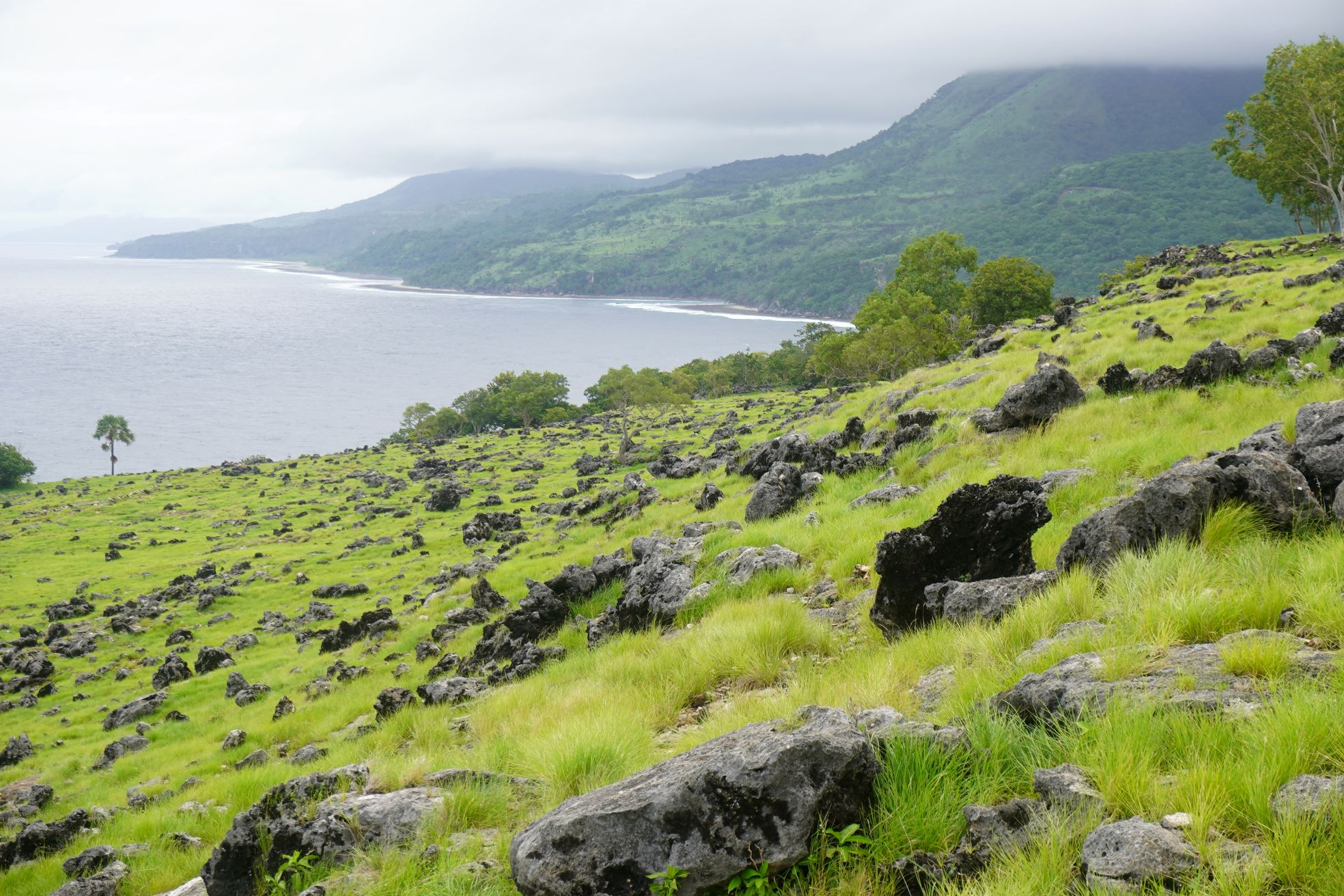
One reason I hiked in the wet season was for lush scenery like this.


There were so many rock pools at low tide.

After just over an hour we reached Atecru, a very pleasant and well laid out village of around 200 people. My guide Jhoky lives here and runs a homestay, though his is purpose built unlike the other homestays on the rest on my walk. Maybe not quite as authentic but it saved me from the family watching TV loudly in Adara the previous night. I had some of the best meals of the trip here, and the toilet was the flashiest.


Like most villages on Atauro Island, Atecru is heavily reliant on fishing, illustrated by the number of boats along the shore. Some people own their own boats while others use community boats, whose use is paid for with a share of the fish caught.


These plants are fenced to protect them from the many goats around.

After arriving at the homestay we headed out to the headland behind the village. The southern half of Atauro Island is rocky and it isn’t possible to progress much further south along the west coast. A short climb rewarded with good views of the bay below.

We visited the cave of Aleti-Tunu Bibi, home to eight thousand year old rock art, though most were intentionally destroyed by fire about a decade ago for religious reasons.


Further along was the Singing Rock which is best understood by watching my YouTube video on this walk (11.50 mins in).

I loved walking around these quiet and lush green hillsides.

Jhoky took me through some of his family farmland, surrounded by rock and branch fences. The land is pretty rocky for farming though, with limited water supply.

The views were pretty vast from up here.

On the return to the village I noticed this incredible tree.

Atecru is one of the more remote villages on the island with no road, no cars or motorbikes, no power other than some solar, but does have some drinking water piped from springs in the hills. There is one small shop, and everything has to be either carried for several hours or brought by boat from the other side of the island.


I had a restful afternoon enjoying being completely off the grid (I’d had no mobile phone reception for three days). Returning to the beach at high tide it was quite different to when I walked it.

As with the previous day (but thankfully not the first day) the heavens opened in the afternoon with torrential rain. I loved sitting under a thatched roof watching the rain fall, though it’d make for some slippery hiking up into the hills the next day…


For the detailed route and logistical information please select this hike below (click top left for the list of hikes).


Leave a Reply