Timor-Leste’s first (and only) national park, which was established in 2007. It was named after independence movement national hero Nino Konis Santana, who was born in Tutuala, which lies within the park. Nino Konis Santana National Park encompasses 123,600 hectares (55% land, 45% ocean), including Com, Tutuala, Jaco Island, Lore, Mount Paitchau, and Lake Ira Lalaro. It is home to a wide variety of landscapes and wildlife, including over 200 species of birds, sea turtles, deer and monkeys.
Although designated as a national park, around 15,000 people in five villages live inside the park boundaries, and activities such as fishing continue as they did before 2007. People have lived in the area continuously for over 40,000 years, and over 100 archaeological sites have been documented. This blog covers most of the national park area, other than Jaco Island, which I will post about separately.


Com is a relaxing fishing village, home to a lovely beach and a few decent guest houses. There isn’t much to do here, but it is a great place to unwind and get away from everything.


On the drive in look out for a traditional Fataluku spirit house inland, and the decaying remains of Com Beach Resort.


The sea looks incredibly inviting but crocodiles are regular visitors, so it is best enjoyed from a distance.


At the eastern end of town there is a sizeable wrecked ship (next to Sina Guest House), and further around the coast the remains of an old port building.


Valu Beach, opposite Jaco Island, is a lovely spot but crocodiles are often seen in the water.


Close by, Lene Hara Cave is an interesting place to visit with a guide, home to several pieces of rock art.


Ili Kere Kere is reached by a rough road off the main road between Tutuala and Valu Beach, followed by a 2.3km return walk (not the 250m denoted by the signage at the start of the trail). This walk gets increasingly rough and steep (downhill) before reaching the best known rock art depicting a sea urchin, as well as a harder to recognise image of cockfighting.


Look out for the giant bee hives hanging from the rock overhang above the rock art.

Tutuala is a small village home to impressive coastal views, the last shops before Jaco Island, a sizeable church, and a former Portuguese building, turned guest house (Pousada Lautém).


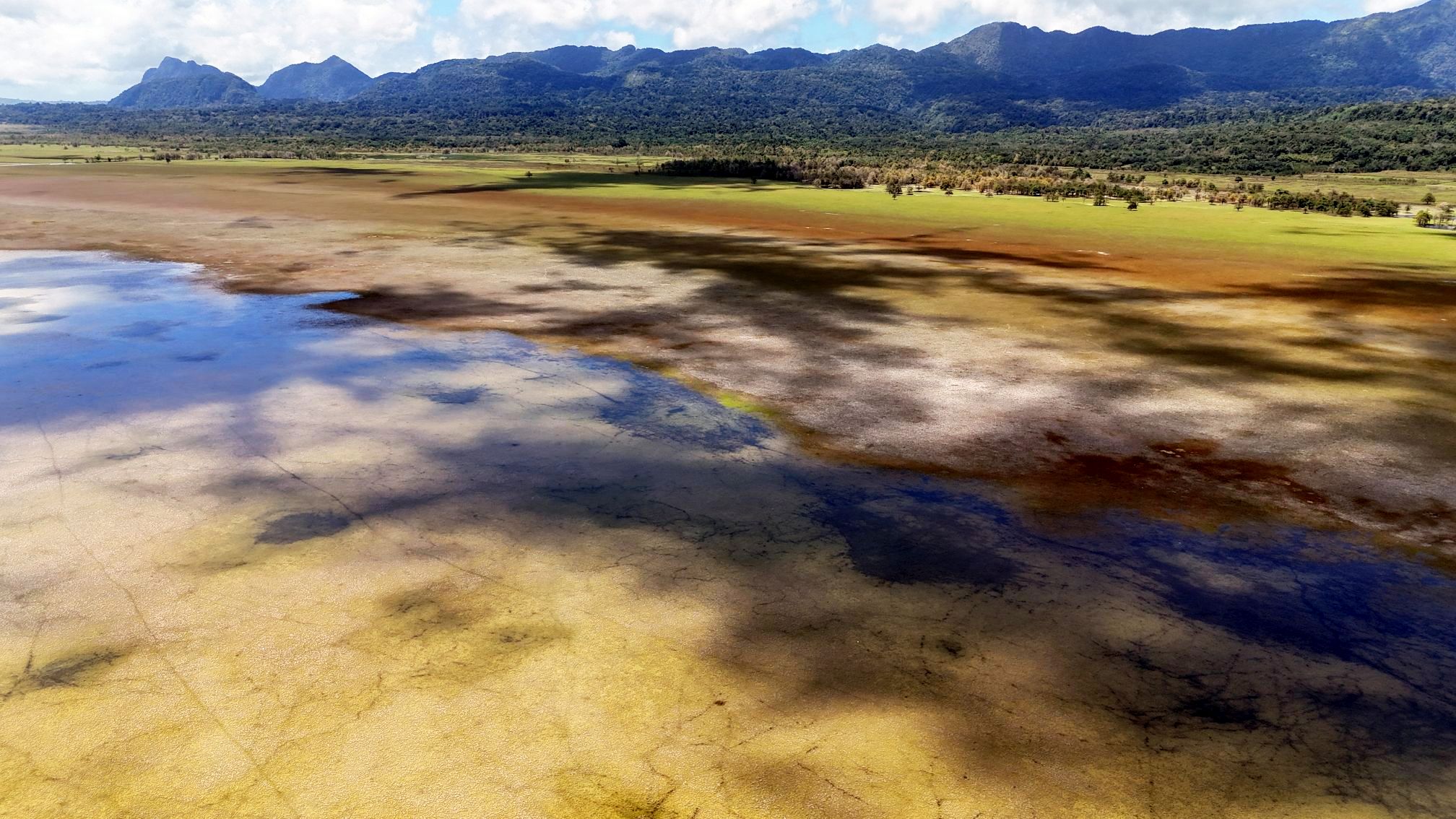
Lake Ira Lalaro is the largest lake in Timor-Leste. It is a seasonal body of water, whose size expands greatly during the wet season, from 1,000 hectares to 5,500 hectares. The northern shore is flat grassland that reclaims much of the lake during the dry season, while the southern shore is swampy with half drowned trees, more photogenic but harder to reach. It is hard is really appreciate the lake without using a drone as the landscape is so flat. In the wet season the lake is apparently home to around 300 crocodiles!


Without a drone this is the view of the lake in the dry season.


Note that the road around the southern shore of the lake to Jaco Island is only passable by motorbike, and then only if you are comfortable driving over this!

Almost every village in the national park has a church, such as Muapitine.


And these three – Maria Auxiliadora Christaos, Capella São Francisco de Sales, and Igreja Kristus Liurai Herana.


The later was by this unusually planned and new looking village, called Herana I believe. I couldn’t find anything about it online but it is quite different to every other village I’ve travelled through in Timor-Leste.


To finish with what is left of Fuiloro Fort, and Fuiloro Cemetery, which of the literally hundreds of cemeteries I’ve seen in Timor-Leste, is the only one I’ve seen with animal bones on top of some graves.


Leave a Reply